
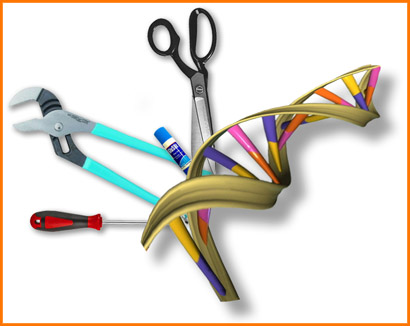
DNA Genealogy is a mix of two disciplines: understanding how DNA works and how it is distributed amongst biological families, and good old-fashioned family history.
Here we will share some tools and websites that you will find useful if you want to try this yourself.
Tools for DNA – understanding the likely relationship between two DNA matches
The best tools both come from the same website. It is a wonderful resource that we cannot get enough of here at Finding Families: https://dnapainter.com/
The first tool is the Shared cM Project and developers are currently on version 4.0 v4
This enables us to type in the amount of centimorgans shared between any two individuals and it will tell us probable relationships between the two, ranging from most likely to least likely.
It also has a handy facility for entering percentages instead of centimorgans where the two matches have tested with 23andme. That company doesn’t show centimorgans.
The sharedcM tool will firstly give us a table, showing the probable relationships in list form, and then below that a pictorial display which helps those who prefer visual explanations.
This is what we would see if we typed in 250cM for instance

And then this

On the chart, the figures under each possible relationship show you the average first, and then the total spread of centimorgans that might encapsulate this. So, if we look at 2C for instance, it shows the average second cousins share 229cM, but they have been known, with outliers, to range between 41 and 592cM.
In our example of 250cM, we would want to know the relative ages (as best as we can) between the two cousin matches. If they are broadly the same age for instance, we can instantly rule out the great greats and the second removes (2R), which would leave us with 2C (second cousin), half first cousin once removed, half second cousin and second cousin once removed as our most likely.
If, however they are 50 years apart, we can probably rule out second cousin and half second cousin instead.
We have written a useful blog about understanding what a second cousin, half cousin and removed cousin actually is. You can read that here.
Our next favourite tool is
What Are the Odds? Otherwise known as WATO Probability Trees.
This clever tool has been designed to help us place someone within a rudimentary family tree where several DNA connections have been identified and we know how they are related to each other. We build their simple tree into WATO, and it calculates the likely position within that family for the original tester
So, if we are DNA related to Bob, Janet, Fred and Sue, and we know how they are related to each other, and we know how many centimorgans they each share with us, we can enter that information into WATO, and it will give us a list of suggested hypotheses for where we would probably sit in that same family.
It is also possible in the v2 beta version to import a Gedcom into the system and it will populate WATO for us. This saves us entering each individual into our WATO tree by hand and is useful where we have already built that family tree digitally.
This is a deliberately blurry picture of a WATO we ran for Brian, a client. We do not want to breach confidentiality, so we are just giving a flavour of it. The most distant known ancestor is on the left of the screen, with each new generation moving from left to right. The lime green boxes show likely places for Brian to fit into that tree. Within each green box there is a score as to the probability of that being the correct position for Brian. The red boxes show where Brian cannot fit. The beige boxes show people who have tested, in the correct place in the tree, with the amount of DNA they share with Brian.

You will learn much more about WATO from the experts who put it together. Have a look at this page which has a great example too.
As a tool, WATO has revolutionised DNA genealogy. We used to do this work on scraps of paper, now it is all achieved at the touch of a button. Amazing.
In a future blog we will focus on Genealogical tools – the family history side of the task
Finding my birth father without even a name
Tell me more about DNA and how it works
DNA testing: The practicalities
What is a second cousin, once removed or half?